How Tennis Score Calls Shape the Crowd
Tennis scoring language turns quiet points into shared moments. Learn how calls, pauses and court customs help spectators follow the match together.
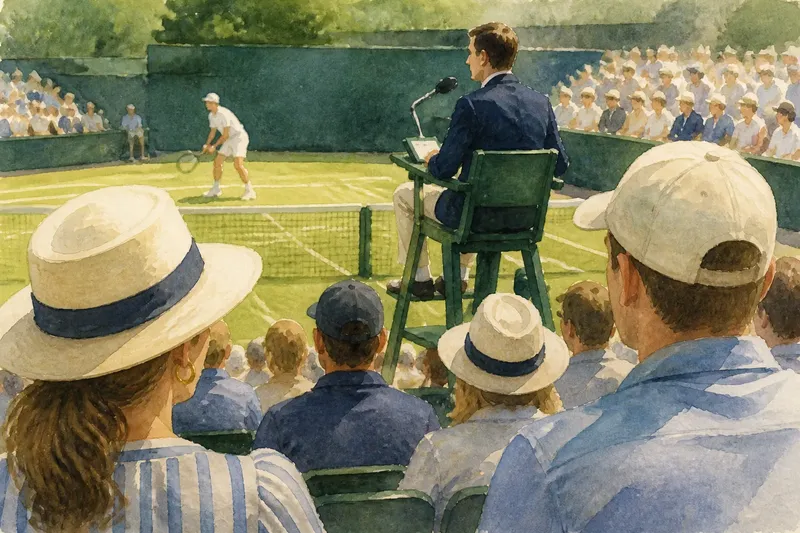
A hush often falls before a player serves at deuce, then the umpire’s “advantage” gives the crowd a new cue. Tennis scoring is more than a record of points: its calls organise attention, give spectators a shared vocabulary and make a match audible even from the stands.
Score calls and attention
The score tells spectators where to look. “Deuce” signals that the game is level at a tense point; “advantage” identifies who has the next chance to finish it. The call does not predict the rally. It frames what is at stake before the players begin.
That distinction matters in a sport where much of the action is quiet between points. The call gives a crowd time to settle, then the serve starts the next burst of movement. Even a spectator who missed the previous rally can reconnect with the match by listening.
The umpire’s voice
An umpire’s call is both information and a boundary. It marks the end of a point, confirms the score and helps restore order before the next one. At a busy court, that steady voice cuts through applause and conversation without turning the match into a running commentary.
Score calls also help spectators learn the game’s vocabulary in context. “Love” means no points in the game, while “thirty-all” tells listeners the players have reached the same score. The terms sound distinctive, but their meaning becomes clear through repetition.
Silence between points
Tennis crowds are expected to quieten as players prepare to serve. The pause is not empty time: it gives each player space to begin the next point and gives spectators a moment to focus. Applause usually follows the rally, rather than interrupting it.
Customs can vary by event and court. If you are unsure whether play has paused for a call or a player is preparing to serve, wait for the umpire or the surrounding crowd before speaking. A little restraint is more useful than trying to memorise every local habit.
Following tennis scoring?
Why does the server’s score come first?
In a game, the umpire calls the server’s points before the receiver’s. Listening for that order makes it easier to match the spoken score to the player serving.
What does “all” mean?
“All” means both players have the same score, as in “fifteen-all”. It is a quick verbal signal that the game is level.
How can I follow a match after arriving late?
Check the display for the current game and set scores, then listen to the next call. The display gives you the larger context; the umpire’s voice fills in the current game.
When should spectators applaud?
Wait until the point has ended, then applaud if the rally merits it. Avoid calling out while a player is serving or preparing to receive.
A spectator’s small routine
Say you arrive at a local court during a game and the display reads thirty-all. You hear the umpire call the server’s score first, watch the next rally, and wait until it ends before applauding. If the call is “advantage receiver”, you know the returner has the next chance to take the game; if it returns to deuce, the game remains level and another point begins the same contest.
There is no need to track every tactical choice or memorise the origin of each term. It is not worth the effort to talk through every point with the person beside you; listening to the calls and respecting the pauses is enough to join the crowd’s rhythm.
- Before speaking: If a player is preparing to serve, wait; if the point has ended, speak quietly between points.
- After a rally: If the umpire has called the score, applaud if you wish; if the next serve is already beginning, keep still.
- When you lose track: If the display is visible, read the game and set scores; if it is not, listen for the next call before guessing.
- At “deuce”: If you hear the score level, expect another point in the same game; if the call is “advantage”, note which player has the chance to finish.
- During a disputed moment: If the umpire pauses play, stay quiet; if play resumes, follow the official call rather than debating from the stands.
- At a new court: If spectators are quiet during serves, follow that custom; if local conditions differ, take your cue from the umpire and nearby audience.
Listening as participation
The most useful way to follow tennis scoring is to keep the spoken call and the display in view as two parts of the same story. The display shows how the match has accumulated; the umpire tells you what is happening now. Notice the pause before a serve, listen for the next call and let the rally resolve before reacting. That small routine makes the court easier to share with everyone playing and watching.