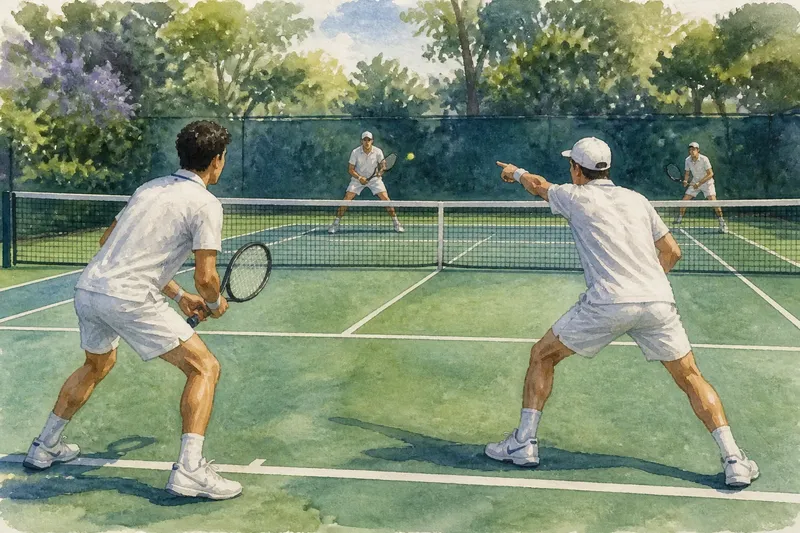
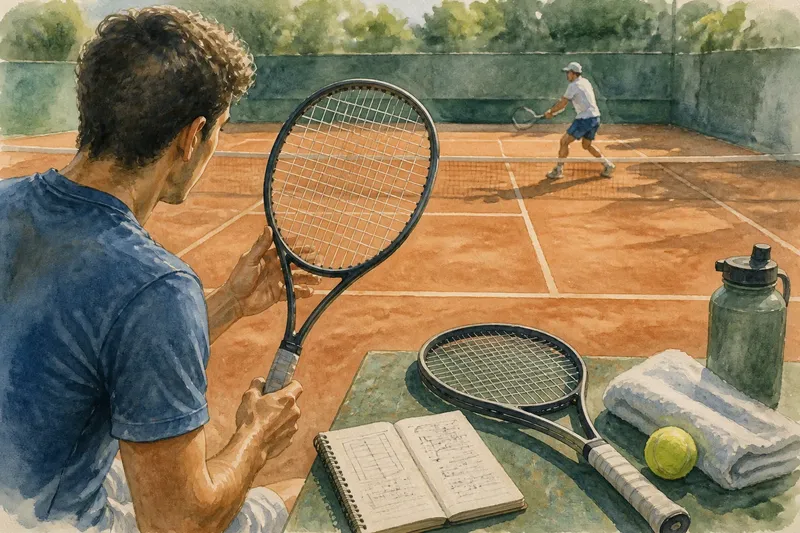
Why the Split Step Comes Before the Ball Chooses a Direction
The tennis split step helps you stay balanced as your opponent strikes, so you can move towards the ball without guessing its direction too soon.
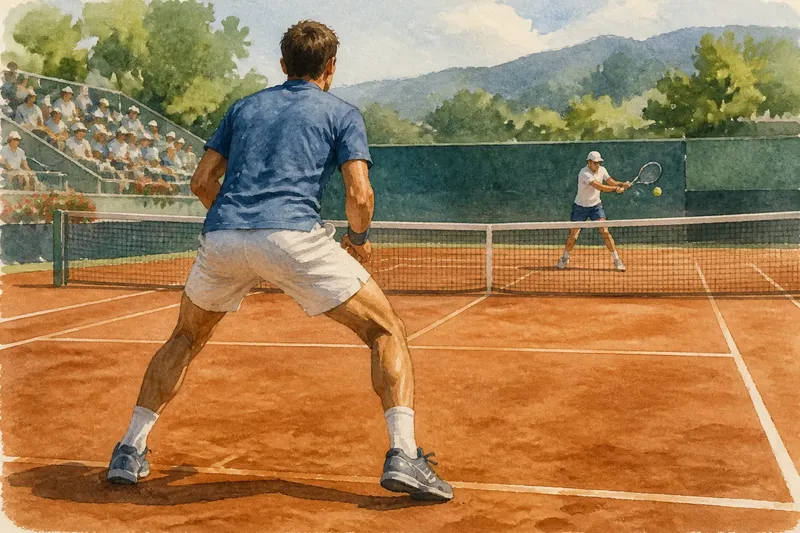
The tennis split step works best when your feet settle as your opponent makes contact. That timing gives you a balanced base for moving towards the shot without guessing its direction too soon.
Start too early and you may land before the ball is struck, then feel stuck as it travels. Start too late and your feet are still settling when you need to push off. Use the opponent’s contact as your cue, adjusting the size and timing of the movement to the pace of the exchange.
Why timing matters
As your opponent prepares to hit, you may still be recovering from the previous shot or moving towards the middle. A compact split step brings both feet into play. Land lightly, with your knees comfortably bent, so you can change direction rather than bracing on one leg.
The movement is not meant to hold you in place. It helps you release towards the ball. Land around contact and let the incoming shot guide your first push. Land too early and your weight may settle before you know where to go. Wait until the ball has travelled a long way and you have already lost time to respond.
Treat the split step as a timing cue, not a reaction trick. Read your opponent’s racket, contact point and follow-through. The step gives your body a more adaptable starting position while that information arrives.
Three timing approaches
There is no single rhythm for every rally. Your opponent’s pace, your distance from the ball and your recovery all affect the timing. Use these options as adjustments, not rigid rules.
Early and compact
Use a small movement when the exchange is steady and you can see your opponent preparing from a comfortable distance. As the racket comes forward, begin to unload your feet; settle lightly around contact.
Keep the movement modest. A high jump or a long pause in the air makes the landing harder to coordinate. The aim is to arrive ready, not to add an action that distracts you from the ball.
Late and responsive
In a quick exchange, a compact, later split may suit you if you can recognise contact without waiting for the ball’s flight. There may be little visible lift. What matters is a balanced landing that allows an immediate push.
This can help when you are recovering from a wide shot and your opponent strikes quickly. Do not force a pronounced hop if there is no time. A light adjustment of your feet is more useful than a big movement that leaves you grounded late.
Adjusting for distance
When you are deep behind the baseline, let the split step prepare your first movement, then use the ball’s flight to adjust your spacing. Close to the net, the ball may arrive quickly, so a lower, quieter landing can be easier to use.
If one fixed rhythm breaks down across court positions, keep the split step connected to contact and change the size of your next movement to suit the distance and shot.
Balance before direction
A useful landing feels balanced enough that you could push either way. Your feet need not be perfectly parallel, and you do not need to freeze in a posed stance. Aim for a soft landing with comfortable knee bend and weight ready to move, rather than pitched onto your heels or committed to one side.
After contact, let your first push follow the ball. A shot to your forehand side calls for movement that opens that route; a backhand-side ball calls for the opposite response. Which foot starts depends on your position and the shot. Instead of copying a fixed sequence, ask whether you are balanced and which direction you can move towards.
Say you are near the middle of the baseline and your opponent strikes towards your backhand. You make a small landing around contact, keep your weight centred, then push towards that side as the flight becomes clear. The result you want is a first step towards the ball without an extra recovery shuffle or a lunge in the wrong direction.
Split step questions?
Should I jump high?
No. A small lift, or even a subtle unloading of your feet, can do the job. If you land heavily or delay your first push, make the movement quieter.
Should my feet land together?
They can land close together, but matching their positions matters less than arriving balanced and able to move either way. Choose a stance that feels stable without becoming rigid.
What if my opponent hits early?
Use the movement available rather than forcing in a full hop. A quick adjustment of your feet and weight can restore balance before you move towards the ball.
How can I practise the timing?
Ask a partner to feed balls at an easy pace and vary the direction. Focus on a light landing around each contact, then repeat from different court positions so the cue stays your opponent’s strike rather than a memorised count.
Choosing your rhythm
Choose the approach that leaves you most ready at contact. If you land too early and feel stuck, make the movement later or smaller. If you are still in the air after the ball is struck, begin sooner. If you move quickly but keep guessing the wrong way, watch the opponent’s contact more closely instead of enlarging the hop.
After a few rallies, ask yourself: could I have moved either way at contact? That check is more useful than judging the split step by how dramatic it looks. The tennis split step earns its place when it preserves your balance until the ball gives you a reason to move.
Perfecting a high, conspicuous hop or rehearsing an identical landing for every ball is not worth the effort. Keep the movement small enough to fit the rally, and give your attention to the opponent’s strike and your own balance. Your first step can then follow the shot instead of anticipating the wrong one.